Verified OEM/ODM Manufacturer Direct

Top 10 Disposable Food Containers Factories & Exporters

Global Foodservice Packaging Benchmark: Technical Specifications, Sustainability Compliance, Material Innovations, and Strategic Procurement Guide

Industry Sourcing Whitepaper

Precision Manufacturing & Global Supply Chain Realities

The commercial food service landscape is navigating a monumental regulatory transformation. Single-use plastic restrictions across Europe, North America, and Australasia demand immediate compliance with zero-leakage performance. Sourcing through reliable, audited export factories is no longer just about low unit pricing; it requires deep verification of thermal barrier stability, grease-proofing chemistry (PFAS-free), automated die-cut precision, and third-party verified ethical integrity. Below are eight top-tier container configurations direct from certified production lines engineered for global volume delivery.

9+
Years Production Tech
2,200m²
Cleanroom Factory
SGS
Audited & Certified
4.3 / 5
Verified Global Trust
Market Intelligence 2025–2030

Future Procurement Trends in Commercial Foodservice Packaging

Procurement leaders for supermarket chains, multi-location restaurant groups, and national distributors must pivot strategies from basic transactional buying to strategic supply assurance. Key market evolutions dictate how bids are evaluated:

1. Water-Based Dispersion Coatings

Traditional PE liners are being phased out in favour of repulpable, water-based barrier coatings. Sourcing directors require containers that repulp in ordinary paper recycling streams without requiring dedicated industrial composting infrastructure, drastically cutting municipal waste taxes.

2. Standardization for Automated Denesting

As dark kitchens and food processing hubs implement robotic packaging lines, dimensional container tolerances must tighten from ±1.5mm to ±0.3mm. Precise stacking flanges and anti-jamming nesting angles prevent high-speed line stoppages and seal failures.

3. Supply Chain Traceability & LCA Audits

Enterprise procurement frameworks now require verified Life Cycle Assessments (LCA) and chain-of-custody documentation (FSC/PEFC certification). Exporters must provide verified scope 1-3 emission reports for paper pulp origin to satisfy Western retail CSR mandates.

Technical Benchmark

Comprehensive Substrate Performance Matrix

Direct comparative engineering data designed to guide product development engineers and procurement directors.

Substrate Material Thermal Limit Barrier Mechanics Grease Resistance End-of-Life Lifecycle Optimal Food Class
Virgin Unbleached Kraft -20°C to +120°C PLA / Water-dispersion KIT Level 9 - 12 (PFAS-Free) Industrial Compost / Repulpable Hot noodles, fried poultry, curries
Solid Bleached Sulfate (SBS) -18°C to +100°C Aqueous barrier / PE KIT Level 7 - 10 Recyclable (Aqueous line) Artisan bakery, sushi, confectionery
Homopolymer Polypropylene (PP) -10°C to +125°C Inherent resin barrier Complete oil barrier Code 5 Polypropylene stream Re-heatable soups, boiling sauces
Clear Polyethylene Terephthalate (PET) -40°C to +65°C High oxygen / gas seal Impervious to cold oils Code 1 Curbside universal Dressed salads, cut fruits, cold poke
Sugarcane Bagasse Pulp -20°C to +150°C Fluorine-free dispersion KIT Level 6 - 8 Home & Industrial compostable Burgers, street foods, dry bento
R&D Horizons

Product Development & Engineering Innovations

Modern disposable food containers are sophisticated thermodynamic barriers. Today's manufacturing focus is centered on structural rigidity with reduced grammage, micro-perforated steam modulation, and total elimination of halogenated compounds.

Rigidity Optimization (Lightweighting)

Through finite element modeling (FEM) in die-press tooling, container bases feature ribbed structural patterns that yield a 22% increase in top-load compression strength while reducing paperboard baseline grammage from 330gsm to 290gsm, significantly trimming ocean freight cubic meters and import duties.

Atmospheric Moisture Exhaust

Steam management without liquid spillage represents a critical challenge for fast-casual delivery. Newly patented labyrinth vapor-escape rim channels let latent moisture release to prevent condensation soggy-crust syndromes while retaining grease and thick sauces during 45-minute transport cycles.

Low-Migration Vegetable Inks

To safeguard food safety and regulatory compliance (EU 1935/2004 & US FDA 21 CFR), production runs utilize soy-based low-migration inks with flexographic web printing. Odorless running avoids volatile organic compound transfers into dairy, soups, and hot lipids during extended warming cycles.

Manufacturing Advantage

Why Global Brands Partner with Luohe Temip Plastic Products

Positioned strategically in Jingyi Road, Dongcheng Industrial Agglomeration Zone, Luohe City, Henan Province, our manufacturing infrastructure operates in the heart of China's food production capital, bridging paper packaging precision with deep real-world culinary performance.

SGS On-Site Audited

Our operational facilities undergo comprehensive on-site third-party scrutiny by SGS Group, verifying quality management, social accountability, and cleanroom standards.

Fortune 500 Qualified

Validated vendor credentials with institutional experience supplying Fortune 500 foodservice operations, demanding absolute color consistency and batch reliability.

Source Material Control

Stringent incoming QA protocols verify burst index, Cobb moisture absorption parameters, and caliper thickness before raw rolls feed into automated lines.

Multi-Category Tooling

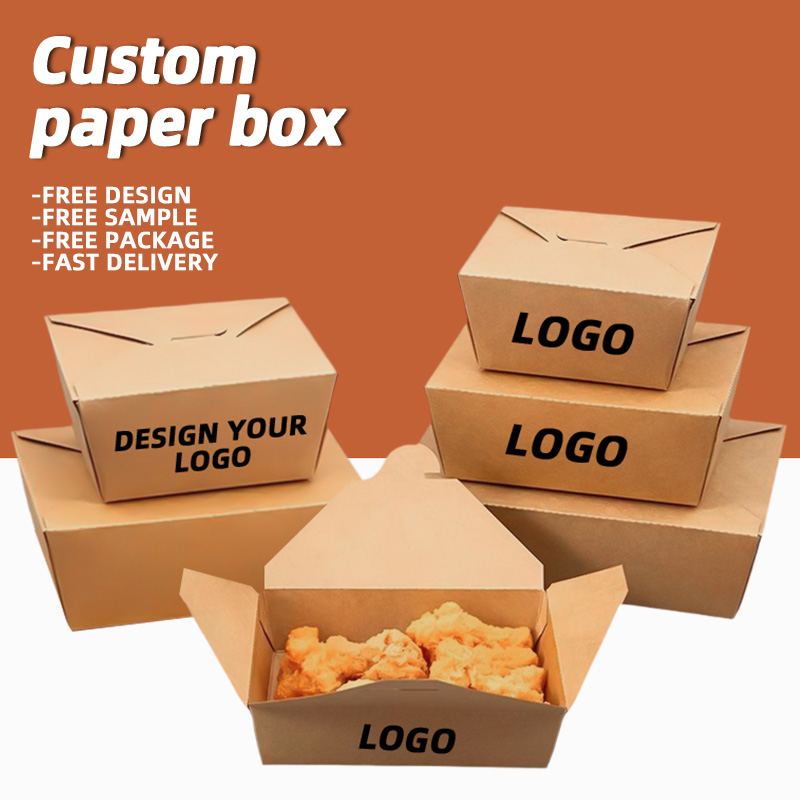
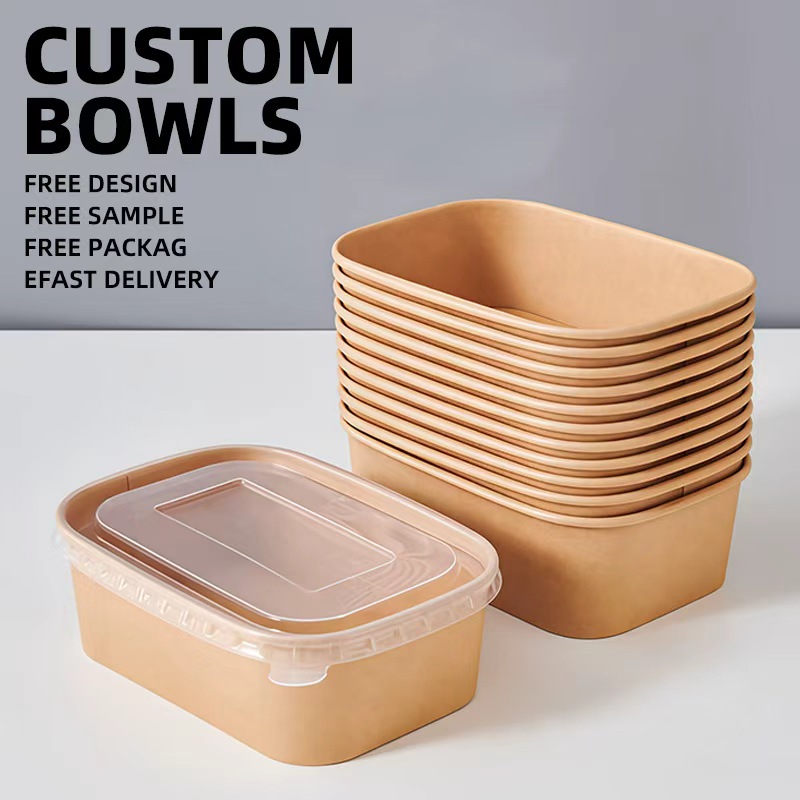
Integrated manufacturing across paper bowls, octagonal boxes, rectangular meal packs, snack boats, and PP/PET containers with extensive stock and custom tooling.

Procurement Guide

Frequently Asked Questions for Importers & B2B Buyers

How do you ensure paper food containers comply with strict global PFAS bans?
We strictly formulate without per- and polyfluoroalkyl substances (PFAS). Our barrier technologies rely on mechanical surface calendering, aqueous acrylic dispersion barriers, or bio-derived PLA lamination. Batch compliance is validated via total fluorine screening assays (<100 ppm total fluorine limit) aligned with US state statutes (e.g., California AB 1200) and European REACH/BfR standards. Full third-party lab documentation is provided with production sample approval.
What is the minimum order quantity (MOQ) and production lead time for custom branding?
For standard configurations using our extensive inventory of existing forming dies, custom CMYK logo print runs start at 30,000 to 50,000 units per SKU. Bespoke structural designs requiring custom die-cutting and folding matrices generally carry an MOQ of 100,000 units. Digital proofing takes 3 to 5 business days, physical strike-offs require 7 to 10 days, and full container mass production completes within 18 to 25 days following signed pre-production sample sign-off.
How do you avoid container deformation and lid detachment during hot soup transit?
Lid-fit failure typically occurs when container rims stretch under hot steam pressure. We employ rigid continuous-curling machines that enforce a high-density, uniform roll-rim diameter with tolerances under ±0.25mm. When matched with our vented PP or high-barrier paper lids featuring dual snap-locking beads, internal positive vapor pressures are released through micron steam vents without compromising the peripheral watertight seal, preventing lid popping during transit.
Can your factory support mixed-SKU container consolidation for multi-product retail lines?
Yes. Recognized as both an experienced manufacturer and export trading entity, we regularly coordinate mixed 40-foot High Cube (40HC) container shipments for international buyers. A typical shipment can combine kraft lunch boxes, soup bowls with matching lids, snack boats, and octagonal containers, palletized and stretch-wrapped with barcoded shipping labels to streamline warehouse check-in for your regional distribution centers.
How do PLA-lined containers compare to conventional PE containers in storage?
Polylactic Acid (PLA) is synthesized from fermented plant starch and delivers comparable moisture and grease performance under standard conditions. However, raw PLA possesses a lower glass transition temperature (~55°C–60°C) compared to standard polyethylene (PE). As a result, PLA-lined containers require climate-controlled warehouse environments during summer ocean shipping and long-term storage to prevent premature embrittlement or softening. For extreme heat applications, our engineering team recommends crystallization-modified CPLA or our latest aqueous barrier coatings.

Request Factory Direct Samples & OEM Quotations

Connect directly with our Luohe engineering and export sales department. Provide your target specifications, artwork requirements, or estimated annual volume, and receive a complete DDP/FOB assessment within 24 operational hours.

Contact Us