1. Industrial Landscape: Sourcing Plastic & Hybrid Food Containers from China
The global foodservice packaging paradigm has undergone an aggressive structural evolution over the past five years. International commercial buyers—ranging from multi-national Quick Service Restaurant (QSR) franchises and hypermarket chains to institutional packaging wholesalers—are no longer merely seeking low-cost per-unit items. Instead, enterprise procurement teams prioritize regulatory resilience, resin traceability, leakage-free structural engineering, and total carbon footprint optimization.
China remains the undisputed manufacturing nucleus of commercial food packaging, delivering unmatched supply chain density. Manufacturing clusters in coastal regions and Central China’s emerging logistical hubs (such as Henan's dedicated food-processing corridors) provide direct, integrated access to virgin polypropylene (PP), polyethylene terephthalate (PET), post-consumer recycled resins (rPET/rPP), and sustainably harvested FSC-certified virgin paperboard. By co-locating raw material polymerization units with high-speed automated thermoforming, multi-station paper cup forming lines, and robotic die-cutting machinery, Chinese tier-one manufacturers reduce material handling latency and scrap overhead by up to 22% compared to Southeast Asian or Western competitors.
Strategic Buyer Takeaway: Modern sourcing contracts must evaluate the manufacturer’s automated conversion lines, scrap-reclaim closed loops, and in-line visual inspection camera systems. In-line vision systems reject flash, rim pinholes, and warped flanges at speeds exceeding 250 units per minute, safeguarding buyers against costly end-user delivery failures.
2. Material Science Deep Dive: Polymer Selection, Barrier Linings & Hybrid Substrates
Choosing the correct substrate requires an exact balancing of thermal endurance, Water Vapor Transmission Rate (WVTR), Oxygen Transmission Rate (OTR), dynamic stacking crush strength, and circular economy compliance. Packaging failures in commercial delivery—such as sidewall softening, lid pop-off from internal steam pressure, or grease strikethrough—invariably stem from polymer mismatches rather than sheer structural wall thickness.
Substrate Material
Thermal Operating Range
Barrier Integrity (Grease / H2O)
End-of-Life Stream
Ideal Commercial Food Application
Virgin Polypropylene (PP)
-20°C to +125°C
Exceptional (KIT 12)
Curbside Recyclable (Code 5)
Hot broth, oily gravies, microwave-reheatable meal kits
Virgin Thermoformed PET
-30°C to +65°C
High Clarity / Aroma Barrier
Curbside Recyclable (Code 1)
Cold salads, sushi trays, fresh cut fruit, deli platters
Kraft Board + PE Barrier
-18°C to +100°C
Moisture & Fat Resistant
Specialized Fiber Recovery
Standard restaurant takeout, fried chicken, sauced noodles
Organic/Bio food service chains with composting access
For liquid soups and high-temperature Asian/Western gravies, injection-molded homopolymer PP remains the benchmark due to its continuous service tolerance above 100°C and resistance to environmental stress cracking under fatty acid exposure. Conversely, for bakery, sushi, and chilled gourmet foods, thermoformed amorphous PET (APET) delivers pristine clarity and moisture retention, ensuring shelf appeal and preventing dehydration under refrigeration.
Global regulatory mandates—notably the European Single-Use Plastics Directive (SUPD), US State-Level PFAS bans, and Australasia’s 2025 National Packaging Targets—are driving rapid technical disruption. Procurement officers must align future contracts with three transformative shifts:
100% PFAS-Free Aqueous Barriers
Traditional grease-proofing formulations historically relied on fluorochemical treatments (PFAS). Contemporary factory leaders have phased out fluorinated additives, switching to aqueous polyolefin dispersions and bio-mineral coatings that achieve oil resistance up to KIT Level 10 without toxic persistence, fully complying with FDA and European REACH guidelines.
Circular PCR Resin Integration
Driven by Extended Producer Responsibility (EPR) taxes, demand for food-grade Post-Consumer Recycled (PCR) content has surged. Advanced Chinese extruders utilize EFSA and FDA non-objection letter (NOL) compliant mechanical decontamination super-cleaning processes, incorporating up to 30%-50% food-grade rPET in non-direct or functional barrier layers.
Monolith Structural Lightweighting
By optimizing mold cooling channels and employing micro-cellular foaming or multi-rib structural geometries, container tare weight is reduced by 12% to 18% while maintaining vertical top-load compressive strength. This lightweighting directly translates into reduced ocean container freight costs and decreased per-unit plastic tax liabilities.
When selecting an overseas manufacturing partner, on-paper certifications must be substantiated by audited factory floor realities. Luohe Temip Plastic Products Co., Ltd. exemplifies the technical rigors required by Fortune 500 corporate buyers and elite restaurant distribution groups.
SGS On-Site Audited Facility
Our operations on Jingyi Road in the Dongcheng Industrial Agglomeration Zone, Luohe City, have been thoroughly evaluated on-site by SGS Group. Sourcing directors can access verified audit dossiers validating clean production conditions, social compliance, and strict structural defect tolerances.
Strategic Food Capital Location
Situated in Henan's foremost food-processing nucleus, Temip operates in symbiosis with global food processors. Real menus, dynamic grease saturation tests, and automated distribution requirements directly inform our R&D team's structural container iterations.
Strict Incoming Material Controls
Every incoming roll of virgin kraft paperboard and every lot of PP resin undergoes mandatory on-site testing for grammage uniformity, moisture content, tensile burst index, and sensory odor limits before entering the thermoforming and cup blanking workshops.
Full OEM/ODM Versatility: Backed by 37 veteran production technicians and packaging design engineers, Temip delivers end-to-end custom product creation: from 3D parametric container drafting, rapid mold tooling CNC fabrication (within 10-15 business days), to 6-color flexographic or gravure corporate branding print setups.
5. Quality Assurance & Factory Audit Protocol for Foodservice Buyers
Institutional procurement risk is mitigated by enforcing an immutable 5-stage quality gate system prior to releasing sea freight bills of lading:
Stage 1: Resin & Pulp In-Line Inspection
Virgin virginity verification, Heavy Metal testing under RoHS/EN 71-3, Bisphenol-A (BPA) non-detection certification, and moisture content control to prevent delamination during heat forming.
Stage 2: Tooling Precision & Rim Calipering
Coordinate measuring machine (CMM) tracking of lid undercut dimensions to ensure a reliable 360-degree snap-fit seal that withstands up to 25 kPa internal gaseous expansion during transit.
Stage 3: Destructive Hot-Liquid Stress Testing
Finished containers are filled with 95°C vegetable oil/water mixtures and held for 48 hours to confirm zero bottom seam weeping, flange softening, or structural collapse under static stack pressure.
Authoritative technical answers to common queries raised by international purchasing managers, supply chain auditors, and custom packaging clients.
What specific certifications guarantee that your containers are food-contact safe?
Our products undergo full compliance validation under US FDA 21 CFR 177.1520 for olefin polymers and European Framework Regulation (EC) No 1935/2004 along with Commission Regulation (EU) No 10/2011 for plastics intended to come into contact with food. Test documentation covering Overall Migration Limits (OML) and Specific Migration Limits (SML) for heavy metals, primary aromatic amines (PAA), and phthalates are conducted via third-party testing institutions such as SGS and TÜV Rheinland.
What are your Minimum Order Quantities (MOQ) for custom-printed vs. generic stock packaging?
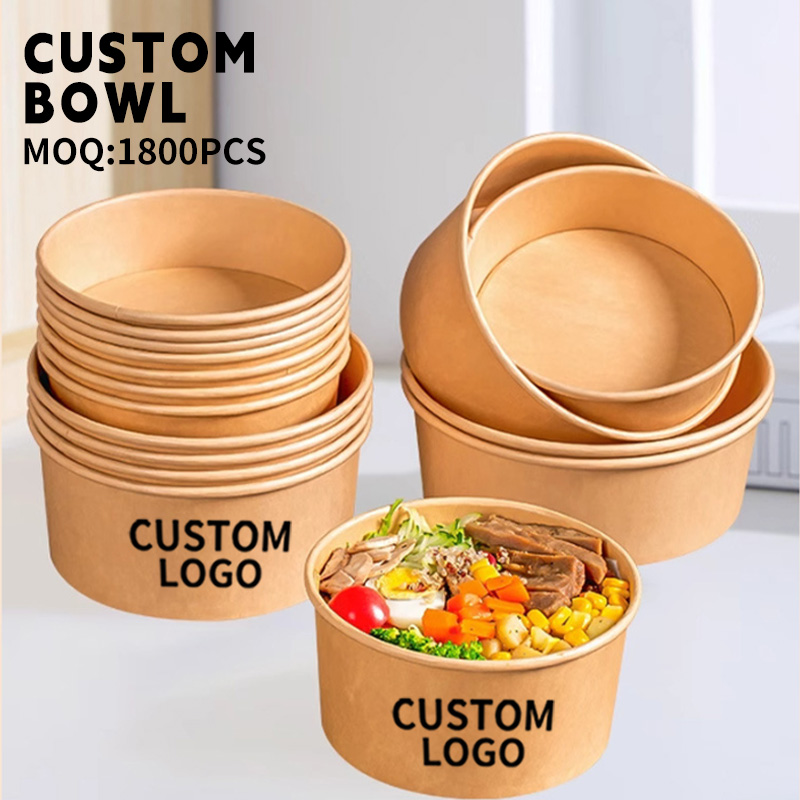
For unprinted, standard inventory items, MOQs start as low as 10,000 to 20,000 units depending on carton master packaging configurations. For custom-branded, flexographically printed paper bowls or custom embossed plastic takeout containers, standard factory MOQs range from 30,000 to 50,000 units per SKU. This threshold ensures optimized run efficiency on our high-speed automated flexo printing and forming machinery while lowering per-unit tooling amortization.
How do you prevent lid pop-off and leaking during motorbike food delivery?
Leakage during delivery occurs when thermal expansion generates internal positive pressure or when container rims flex under external impact. We solve this by implementing precision CNC-machined undercut locking beads on our PET and PP lids that mate flawlessly with rolled paper rims or rigid plastic flanges. Furthermore, our hot food containers feature integrated micrometer steam release vents that relieve gaseous buildup without allowing liquid splashing or condensation seepage.
Can your factory supply 100% biodegradable or repulpable takeout food containers?
Yes. We provide certified Polylactic Acid (PLA) lined paperboard solutions as well as next-generation water-based aqueous dispersion barrier coated (ADBC) packaging. Aqueous coated containers are 100% repulpable in standard municipal paper recycling streams without requiring specialized commercial composting infrastructure. Our bio-resins and plant-based coatings conform strictly with EN 13432 and ASTM D6400 industrial compostability benchmarks.
What is the turnaround time for tooling molds and mass production shipments?
New custom container geometry prototyping and CNC aluminum mold fabrication are completed within 10 to 15 business days. Rapid SLA/3D printed samples can be dispatched within 72 hours for ergonomic and volumetric verification. Once pilot samples are signed off, commercial mass production lead times generally range between 20 to 30 calendar days for full 40-foot High Cube (40'HQ) container volumes.
How do you optimize shipping container space (CBM) to reduce ocean freight costs?
Packaging bulkiness directly impacts landed unit costs. Our engineers calculate custom nesting draft angles on all cup and bowl bodies, achieving a tight nesting pitch (often less than 5mm per stacked unit). High-density nested sleeves packed into heavy-duty 5-ply double-wall corrugated export master cartons maximize container cube utilization, allowing clients to load between 15% and 25% more units per 40'HQ container compared to standard market designs.
Ready to Upgrade Your Global Food Packaging Supply Chain?
Direct from our SGS-verified facility in Luohe, Henan. Connect with our dedicated packaging engineering and international sales team today to request physical test samples, technical data sheets (TDS), or custom mold tooling quotations.