Polymer Science & Food-Contact Governance
CE Certification, Migration Limits, and Polymer Integrity for Deli Packaging
In high-throughput deli merchandising, the commercial viability of rigid plastic deli containers hinges on polymer purity, thermal dimensional stability, and absolute non-migration of volatile components into lipid-rich or acidic foodstuffs. When international procurement officers evaluate CE Certified Plastic Deli Containers Factory & Suppliers, certification extends beyond surface claims: it necessitates rigorous verification under European Commission Regulation (EU) No 10/2011 on plastic materials intended to come into contact with food, and Framework Regulation (EC) No 1935/2004.
Standard commercial deli containers are predominantly manufactured from virgin Polypropylene Random Copolymer (PP-R) or Clarified Homopolymer Polypropylene (PP-H). PP delivers an intrinsic thermal operating window ranging from -20°C (blast freezing) up to 120°C (hot filling, microwave reheating, and warming display cabinets) without plasticizer leaching or mechanical warping. Unlike amorphous polyethylene terephthalate (PET), which crystallizes and deforms when exposed to hot soups or boiling curries exceeding 65°C, thermoformed and thin-wall injection molded PP preserves its elastic modulus, resisting sidewall buckling during stacking.
| Evaluation Parameter |
Polypropylene (PP Deli Standard) |
Amorphous PET (A-PET) |
High-Barrier Kraft Hybrid |
| Operating Temperature |
-20°C to +120°C (Microwave Safe) |
-40°C to +65°C (Cold Counter Only) |
-18°C to +100°C (Hot Display Safe) |
| Overall Migration Limit (OML) |
< 10 mg/dm² (EU 10/2011 Passed) |
< 10 mg/dm² (Compliant) |
Zero Fluorochemicals / PFAS-Free |
| Lipid & Sauce Barrier |
Total Hydrophobic Resistance |
Excellent Oil Barrier |
Water-Dispersed Aqueous Coat |
| Acoustic Snap Fit Retention |
High Flex Fatigue Resistance |
Rigid, Prone to Low-Temp Cracking |
Interlocking Rim Lock Flanges |
| Circularity / Stream |
Class 5 (Curbside Recyclable) |
Class 1 (High Recycled Value) |
Industrial Composting / Repulpable |
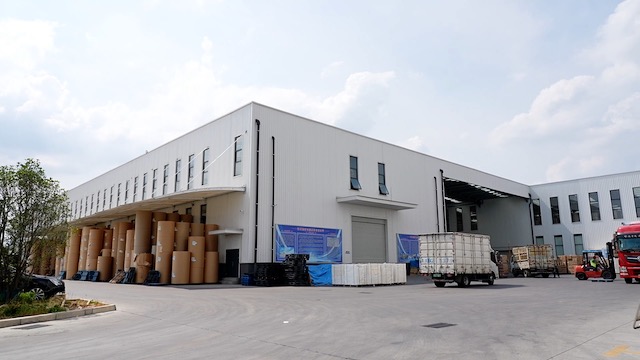
Our Luohe manufacturing plant executes Overall Migration Limit (OML) and Specific Migration Limit (SML) analytics utilizing standard food stimulants: 10% ethanol (simulant A for aqueous foods), 3% acetic acid (simulant B for acidic matrices), and vegetable oil or 95% ethanol (simulant D2 for free fatty surfaces). Traceability protocols guarantee complete absence of primary aromatic amines (PAAs), ortho-phthalates, and bisphenol compounds (BPA, BPS), satisfying both EU and US FDA 21 CFR 177.1520 mandates.
1. Mono-Material Recyclability & Circularity Mandates
With the European Union Packaging and Packaging Waste Regulation (PPWR) advancing strict recyclability thresholds, multi-layer composite plastics are being phased out. Enterprise procurement is standardizing on mono-material Polypropylene (PP) tub-and-lid ecosystems that enter standardized curbside mechanical recycling streams without secondary delamination steps.
2. Ultra-Thin-Wall Injection Molding (IML) Weight Optimization
To counteract escalating freight tariffs and plastic packaging taxes (such as the UK Plastic Packaging Tax), tier-1 manufacturers utilize high-cavitation thin-wall injection technology coupled with In-Mold Labeling (IML). This trims container tare weight by 18% to 24% while increasing top-load compressive strength through calculated structural ribbing.
3. Tamper-Evident Geometries & Delivery Logistics
The expansion of third-party meal delivery platforms has elevated consumer concern over transit tampering. The industry is discarding secondary shrink-bands in favor of integrated mechanical tear-strip lids. When closed, an internal locking barb securely seals the perimeter; opening forces a visible fracture along a molded frangible hinge, verifying food integrity.
4. Transition Away from PFAS Fluorinated Surfactants
Stringent prohibitions across North America and Europe against Per- and Polyfluoroalkyl Substances (PFAS) in food contact surfaces require buyers of paper-deli hybrids to demand third-party organic fluorine test reports (< 100 ppm total fluorine). Suppliers offering aqueous dispersion mineral coatings are rapidly displacing fluorinated greaseproofing agents.
5. Digital Product Passports (DPP) & Batch Traceability
Enterprise food brand audits increasingly necessitate direct batch tracking down to the polymer polymerization lot. QR codes laser-etched onto tooling bases communicate raw resin certificates of analysis (COA), carbon footprint computations, and end-of-life sorting parameters directly to automated recycling optical sorters.
6. High-Speed Robotic Dispensing Automation Fit
Commercial central kitchens and contract food packagers increasingly operate automated denesting machines. Deli containers must feature engineered stacking shoulders and micro-air relief vents that prevent vacuum lock when containers are nested, ensuring single-drop mechanical dispensing at speeds exceeding 120 units per minute.
Q1: How does CE certification apply to plastic deli containers in the EU?
Under European law, food packaging materials demonstrate compliance via the CE-aligned Framework Regulation (EC) No 1935/2004 and Plastics Regulation (EU) No 10/2011, accompanied by a formal Declaration of Compliance (DoC). This documents that overall migration into food simulants remains below 10 mg/dm² (or 60 mg/kg) and that specific heavy metals, plasticizers, and primary aromatic amines remain strictly within regulatory thresholds.
Q2: What prevents lid detachment and liquid leaks during delivery transit?
Our PP deli lids are engineered with an intentional negative interference tolerance of 0.15mm to 0.22mm against the container rim. When pressed, the sealing flange stretches elastically over the rim bead and locks into an under-cut channel, producing a distinct audible "click". This mechanical acoustic snap lock maintains a hermetic seal under internal hydraulic pressures up to 35 kPa, preventing soup or sauce leakage.
Q3: Can these containers withstand microwave reheating and oil temperatures?
Yes. High-purity Polypropylene possesses a melting point between 160°C and 165°C and a continuous heat deflection temperature (HDT) up to 120°C. It is rated microwave-safe for boiling sauces, chili, and greasy gravies. Unlike polystyrene (PS), which softens and leaches styrene monomer when exposed to high heat and lipids, PP retains its inert polymer structure without odor emission.
Q4: What is the factory minimum order quantity (MOQ) and sample lead time?
For standard off-the-shelf tooling formats (such as 8oz, 16oz, 32oz round deli pots and 172mm rectangular lids), our baseline MOQ is 10,000 units per SKU. For custom colored resin masterbatch formulations or branded embossed tooling, the MOQ is 50,000 to 100,000 units. Pre-production functional samples are prepared and dispatched within 3 to 5 business days for client compatibility and line-filler testing.
Q5: How do you test stacking compressive strength for pallet shipment?
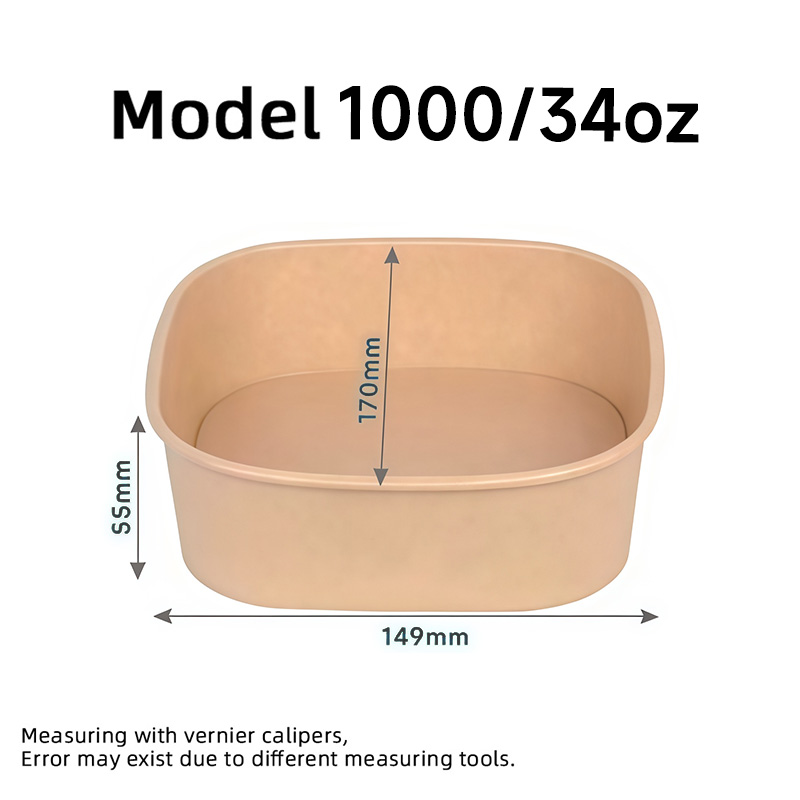
We evaluate container top-load compressive strength according to ASTM D642 protocols using an automated compression tester. A standard 1000ml container exhibits an axial load resistance exceeding 32 kgf (kilogram-force). This guarantees that corrugated shipping cartons stacked 5 to 6 layers high on sea freight pallets will not crush bottom-tier containers during extended ocean transit.
Q6: How is food safety verified during the manufacturing cycle?
Our Luohe facility maintains strict food-grade manufacturing conditions. We operate closed-loop automated material conveyance systems that draw virgin polymer pellets directly into dehumidifying dryers and molding machines without human handling. Finished containers pass inline optical camera vision systems checking for rim burrs, pinholes, and particulate contamination prior to automated sleeve packing.