0%

China’s plastic food packaging sector serves a wide range of businesses, from neighborhood snack brands to large food processors. Its manufacturers produce items such as takeaway containers, cups, trays, films, and flexible pouches. Choosing a supplier is not just a matter of comparing prices. Material quality, production consistency, communication, and delivery planning all affect the finished package.

This guide to top Plastic Food Packaging manufacturers in China helps buyers compare suppliers using practical questions. What materials and formats does each company offer? Can it provide clear product specifications, samples, and relevant food-contact documentation? How does it manage quality checks, custom printing, and order timelines? These details matter. A polished catalog alone cannot show how a factory handles a production change or a delayed shipment.

The right fit depends on the product being packed. A rigid container for a hot meal has different performance needs from a thin film for dry snacks. Buyers should discuss dimensions, sealing methods, storage conditions, and expected order volumes before requesting a quotation. They should also confirm claims with current documents and, where possible, inspect samples or arrange a factory review. Not every supplier fits. Even a capable manufacturer may not suit a small trial order, a complex design, or a tight schedule. This overview offers a starting point, not a final verdict; supplier details and capabilities can change, so careful verification remains essential.
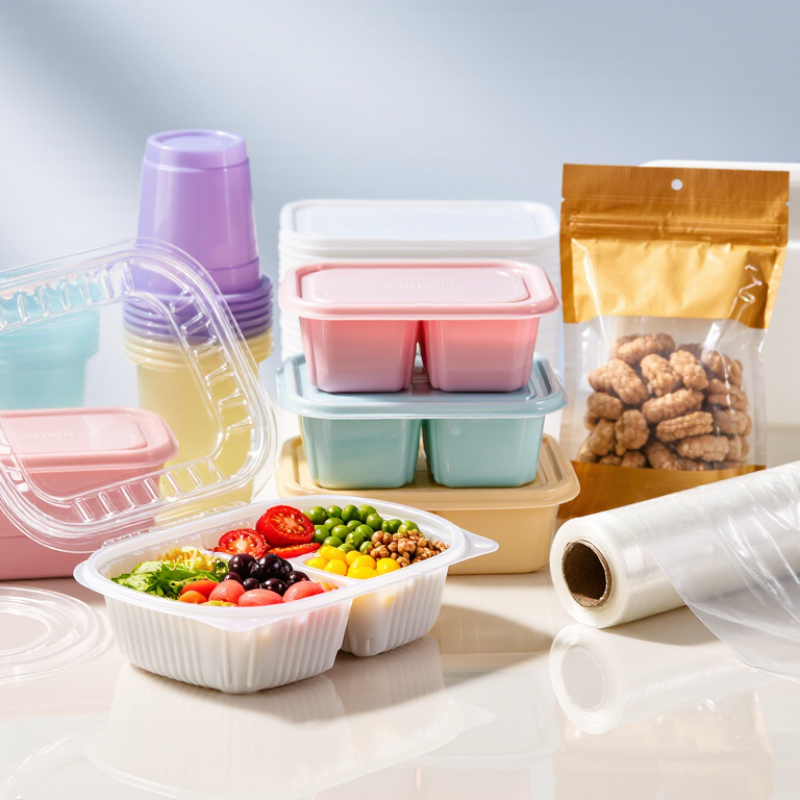
Top Plastic Food Packaging Manufacturers in China

Plastic Food Packaging Manufacturing in China: Industry Overview

China’s plastic food packaging industry serves restaurants, supermarkets, food processors, and export-oriented supply chains. Manufacturers commonly produce trays, cups, films, containers, and multilayer pouches. Production may combine extrusion, thermoforming, injection molding, printing, and sealing. The exact process depends on the package shape, material, and expected use.

A typical factory workflow starts with incoming-material checks, followed by forming and trimming. Operators inspect dimensions, seal strength, appearance, and contamination risks at different stages. Small details matter: an uneven rim can weaken a seal, while inconsistent film thickness may affect handling. Some facilities use automated inspection; others rely more heavily on manual checks. Quality systems can vary.

Material choices often include PET, PP, and polyethylene, selected for different levels of clarity, stiffness, and heat resistance. Lightweight designs can reduce material use, but thinner packaging may be less durable during transport. Recyclability also depends on local collection and sorting systems, not just the package itself. Progress is real, but uneven. For buyers, useful questions include material composition, production capacity, sample consistency, and documented quality procedures. A sample is informative, though one sample cannot prove every production run will match.

Main Packaging Types and Materials Produced

China’s food-packaging manufacturers produce rigid containers and flexible formats. Common products include PET bottles, PP tubs and lids, polyethylene film, takeaway trays, and stand-up pouches. PET offers clarity for drinks and chilled foods. PP tolerates heat better, while PE films provide moisture barriers and flexible seals. Multilayer films can combine these functions, but their layers may be difficult to separate after use.

Material choice depends on the food, filling temperature, shelf-life target, and transport conditions. A thin pouch can save space; a rigid tray can protect soft produce. Details matter.

The OECD’s Global Plastics Outlook (2022) estimates that packaging accounted for 31% of global plastics use in 2019. This figure describes global use, not China’s manufacturing output. It offers useful context, but not a country-level production measure.

Manufacturers should also consider resin specifications and food-contact testing for the intended application.

One trade-off is easy to overlook: adding layers may improve barrier performance, yet complicate sorting and recycling. The right structure is not always the simplest one.

How Leading Chinese Manufacturers Operate

Leading Chinese food-packaging manufacturers typically coordinate product design, tooling, production, and inspection under one operating system. Teams check wall thickness, sealing performance, and food-contact material specifications before full production. On the factory floor, operators monitor temperature and cycle times; a poorly set seal can mean leaks, wasted product, and costly rework. This system is not flawless. Supplier changes and rushed specifications can still create gaps, so buyers should ask how changes are documented.

The scale of the challenge is clear. The OECD’s Global Plastics Outlook (2022) estimates that packaging generated 40% of global plastic waste in 2019. That figure is worldwide, not specific to China, but it shows why material use and end-of-life planning matter. Capable suppliers can provide material specifications, batch records, and sample-testing results. Buyers should verify these documents against the exact package and intended use, rather than relying on broad claims. Ask for evidence. A neat sample proves little about a stable production run.

Tips: Request a production sample, then test its fit, seal, and durability with the actual food and filling process. Confirm minimum order quantities, lead times, and how defects are handled. Ask what happens when a resin or component changes. A clear answer matters. So does a written record.

Profiles of Notable Plastic Food Packaging Manufacturers

Profiles of Notable Plastic Food Packaging Manufacturers

China’s notable plastic food-packaging manufacturers often focus on distinct product groups. Some produce rigid trays, cups, and lidded tubs for chilled foods. Others specialize in flexible films, pouches, and printed wraps. Integrated manufacturers may handle film extrusion, forming, and sealing under one roof. That can simplify quality checks, but does not guarantee better performance.

The OECD’s Global Plastics Outlook (2022) estimates that global plastics use reached 460 million tonnes in 2019, twice the 2000 level. It also identifies packaging as roughly 40% of plastic waste. These figures help explain why manufacturers increasingly discuss material reduction and recyclability. Buyers should still check practical details: seal strength, food-contact documentation, and how packaging performs on actual filling lines. A sample pouch that seals well by hand may wrinkle at production speed. Details matter.

Tips: Request samples in the intended size and material, then test them with your product, filling temperature, and transport conditions. Ask for current test records, not just a product brochure.

How to Compare Suppliers and Assess Product Quality

When comparing plastic food packaging manufacturers in China, start with the same written specification for each supplier. Include dimensions, thickness, material type, color, closure style, and intended use. Otherwise, a low quote may simply describe a lighter or less complete product. Ask for current samples from routine production, not only a specially prepared display piece.

Small details matter. Check for uneven edges, cloudy areas, sharp seams, and lids that need excessive pressure to close. A polished sample can mislead.

Request quality records linked to production batches, plus clear procedures for handling defects and material changes. For containers, practical checks may include weight variation, leak resistance, seal consistency, and performance after contact with the intended food. Ask how tests are performed and whether results can be traced to the sample or batch you received.

Ask for evidence. Compare lead times, minimum order quantities, inspection methods, and how quickly the supplier reports a problem. A factory visit or live production review can reveal whether checks happen on the line or only at final inspection.

Still, paperwork and visits cannot guarantee every shipment. Keep a retained sample, agree on acceptance criteria, and inspect incoming goods against them. That step is easy to overlook.

FAQS

What details should buyers include in a packaging specification?

List dimensions, thickness, material, color, closure style, and intended use. Otherwise, quotes may describe different products.

Which materials are commonly used for plastic food packaging?

PET, PP, and polyethylene are common choices. They differ in clarity, stiffness, and heat resistance.

How can buyers check a packaging sample?

Look for uneven edges, cloudy areas, sharp seams, and lids that need too much pressure. A polished sample can still mislead.

What quality checks matter for containers?

Check weight variation, leak resistance, seal consistency, and performance with the intended food. Ask how results are recorded.

Can one sample prove every production run will match?

No. Keep a sample from routine production, but remember it cannot represent every batch.

What should buyers ask about a factory’s quality procedures?

Ask for batch-linked records and clear steps for handling defects or material changes. Evidence matters.

Which manufacturing processes may factories use?

Processes can include extrusion, thermoforming, injection molding, printing, and sealing. The package design determines the exact mix.

How should buyers inspect incoming goods?

Agree on acceptance criteria, retain a sample, and compare incoming goods against it. This step is easy to overlook.

Conclusion

China’s plastic food packaging industry serves a wide range of food producers, retailers, and food-service businesses. Manufacturers produce packaging in formats such as trays, cups, containers, films, and pouches, using materials selected for strength, flexibility, clarity, and suitability for different foods. Their operations may include product design, material processing, printing, quality checks, and customized production to meet customer requirements.

When comparing suppliers, buyers can look beyond price to assess manufacturing capacity, consistency, communication, delivery performance, and experience with the required packaging format. Product quality should be evaluated through specifications, sample testing, material properties, sealing performance, and the supplier’s quality-control practices. Understanding these factors helps businesses identify Plastic Food Packaging partners that can provide dependable products and support their operational needs.

Ethan

Ethan

Ethan is a professional marketing specialist with a strong understanding of the company’s products, customers, and market. He regularly contributes expert articles to the company website, sharing practical insights that help readers understand product features, compare options, and make informed......