0%

Food Packaging Containers do more than hold a meal. They protect texture, limit contamination, and help products survive transport from factory to store. Yet the right container depends on the food, distribution route, shelf-life target, and recovery options available to customers. A chilled salad in a clear tray has different needs from soup in a heat-resistant cup.

The market is substantial. Grand View Research valued the global food packaging market at about US$456.3 billion in 2023 and projected continued growth through 2030. FAO’s 2023 food-loss assessment estimated that 13.2% of food is lost between harvest and retail. Packaging cannot solve that problem alone. But suitable formats can help protect food during storage and distribution. There is no universal best container.

Food-packaging specialist Dr. Aaron L. Brody has emphasized the need to protect food quality across the supply chain; in paraphrase, a package must perform from production through consumption. That practical test helps frame this guide to the top worldwide suppliers. It considers material range, food-contact expertise, manufacturing capacity, and support for customer-specific designs. Supplier claims still deserve scrutiny. A recyclable label, for example, does not guarantee local collection or processing. The strongest partners explain trade-offs clearly, provide relevant technical documentation, and match container performance to the actual product—not just a brochure.
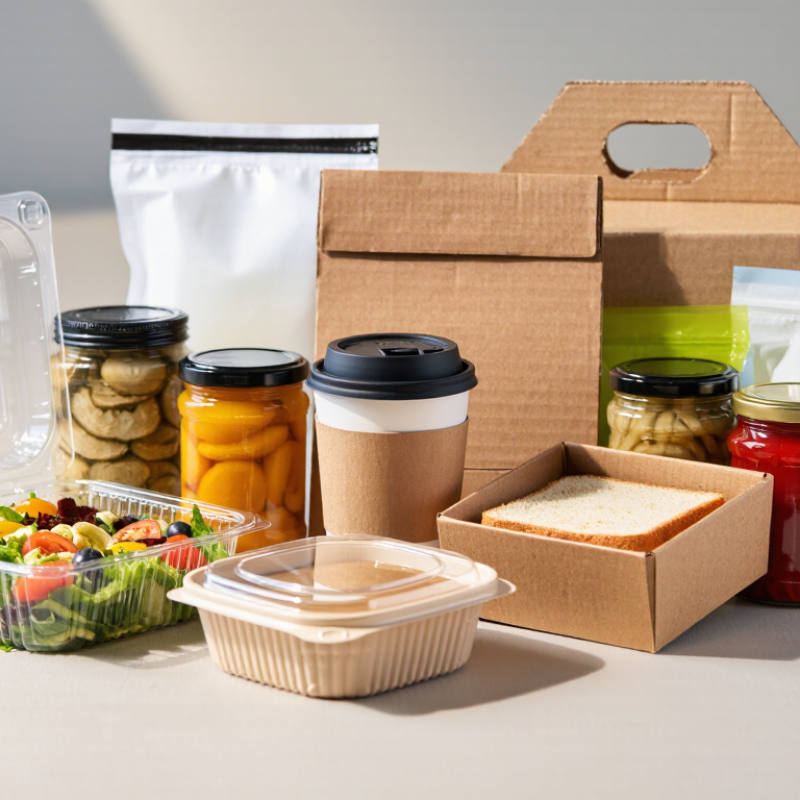
Top Suppliers of Food Packaging Containers Worldwide

Food Packaging Containers: Industry Scope and Key Functions

Food packaging containers include cups, trays, tubs, bottles, cartons, and flexible pouches. Their scope spans materials such as paperboard, glass, metal, and food-contact plastics. Suppliers typically consider product type, filling method, storage conditions, and transport distance. A chilled soup cup needs a secure seal and leak resistance. A dry snack pouch may need a barrier against moisture and oxygen. The details matter.

Containers help protect food from contamination, physical damage, and quality loss. They also support portioning, stacking, storage, and clear product identification. For processors, consistent dimensions can reduce filling-line interruptions. For retailers and consumers, easy opening and reliable closure improve handling. Yet no container performs every function equally well. A package can appear efficient on a shelf but prove awkward to store or recycle. That trade-off deserves a closer look.

Tips: Match container specifications to the actual food and filling process. Check seal integrity, temperature limits, and compatibility with automated equipment. Ask suppliers for relevant test data, not just general claims. Compare packaging weight with protection needs; lighter is not always better if damage increases. Small trials can reveal problems that a polished sample hides.

Top Suppliers of Food Packaging Containers Worldwide

Food Packaging Containers: Industry Scope and Key Functions

Packaging containers help protect products, preserve quality, support transport and storage, and communicate product information. This chart provides a wider industry context: it shows U.S. packaging and containers waste generated by material in 2018, not food packaging alone.

Source: U.S. Environmental Protection Agency, Containers and Packaging Product-Specific Data. Values are millions of U.S. tons.

Main Container Types and Materials Used in Food Packaging

Food packaging containers range from thin films and rigid tubs to trays, cartons, and jars. Each format suits different foods. A clear plastic tub makes chilled salad easy to inspect, while a sealed pouch can reduce storage space. The right choice depends on moisture, grease, temperature, and transport conditions. Small details matter.

Common materials include polyethylene and polypropylene, paperboard, aluminum, glass, and molded fiber. Plastics are lightweight and can provide useful moisture barriers, but performance varies by resin and structure. Paperboard offers a printable surface, though coatings may affect how it handles liquids. Aluminum blocks light and air well. Glass is chemically stable, but its weight and breakage risk can complicate shipping. No material is perfect.

For buyers comparing suppliers, ask for the container’s intended use, thickness, closure design, and barrier properties. Request samples and test them with the actual food, filling temperature, and storage period. A lid that looks secure on a desk may loosen during delivery. That is easy to overlook. Also check whether material claims apply to the complete package, not just one component. Packaging choices involve trade-offs, and a neat specification sheet cannot replace a practical trial.

How to Assess and Compare Global Packaging Suppliers

Assess suppliers against the same product brief, not their best-looking samples. The FAO’s 2019 State of Food and Agriculture estimated that 14% of food is lost between post-harvest and retail. Packaging cannot prevent every loss, but suitable barriers and reliable seals can help protect food quality. Request test results for oxygen and moisture transmission, seal strength, and performance at your filling temperature. Ask whether samples came from routine production. Ask for proof.

Check food-contact documentation, batch traceability, and the scope and validity of relevant certifications. Compare production capacity, lead times, minimum order quantities, and documented quality controls. The OECD’s 2022 Global Plastics Outlook reported that packaging generated 40% of plastic waste in 2019. Ask suppliers for material composition and credible end-of-life information; do not treat “recyclable” as a guarantee of local collection or processing.

A glossy sample can mislead. Test containers on your own line, including during transport simulations and temperature changes. Record leakage, deformation, and reject rates. Compare total landed cost, including freight, tooling, storage, and damaged units—not just the quoted price. Review corrective-action records and ask how the supplier handles a delayed shipment or a failed batch. One comparison can still miss something: actual performance may vary between production runs. A second production sample is worth the wait.

Leading Suppliers and Their Regional Market Presence

Food packaging suppliers serve distinct regional needs. In North America, buyers may value dependable distribution and a broad choice of rigid and flexible containers. European markets often place strong emphasis on recyclable materials and clear product specifications. Across Asia-Pacific, manufacturing capacity and fast-moving demand can make local production especially useful. These are broad patterns, not guarantees. Markets vary.

In Latin America, the Middle East, and Africa, supplier reach may depend on local converting facilities, import routes, and distributor networks. A nearby warehouse can shorten delivery times, while a distant factory may offer a better fit for unusual sizes or larger orders. Regional presence means more than a sales office. Check where containers are made, how samples are approved, and whether supply can continue during seasonal demand. That map is never perfectly neat; I would verify each claim directly.

Tips: Ask suppliers for sample containers, written dimensions, material details, and realistic lead times for your delivery region. Confirm food-contact documentation suits your product and intended use. Compare landed cost, not just the quoted unit price. A small lid mismatch can create real packing delays. Keep a backup source when practical.

Manufacturing, Food Safety, and Sustainability Trends

Food packaging suppliers are adapting production to meet changing needs in manufacturing, food safety, and sustainability. Automated forming and sealing can improve consistency, while routine checks help catch weak seams or uneven container walls. Consistency matters. But automation alone cannot prevent every defect; staff still need clear inspection steps and reliable records.

Food safety starts with packaging that suits the product, filling temperature, and storage conditions. A container should resist leaks and protect food during handling. Ask for material specifications and test results relevant to the intended use. Sustainability choices need similar care. Lightweight designs may reduce material use, but they must still protect food from damage and spoilage. There is no perfect format. A recyclable package may have limited value where collection systems are unavailable, and reusable containers require practical washing and return processes.

Tips: Ask suppliers how they test seals and confirm material suitability. Request samples, then inspect them after filling and transport simulation. Compare packaging weight alongside product protection. Small trials help, though they may not reflect every real-world condition. Keep that limitation in mind.

Top Suppliers of Food Packaging Containers Worldwide - Manufacturing, Food Safety, and Sustainability Trends Global supplier landscape by packaging segment; company names and brand rankings are intentionally omitted.
Supplier Segment Typical Containers and Uses Manufacturing Focus Food-Safety Considerations Sustainability Considerations Relevant Regulatory or Standards Context
Rigid plastic packaging PET bottles and trays; HDPE bottles; PP tubs, pots, and containers. Used for beverages, dairy products, ready meals, and fresh foods. Injection molding, blow molding, thermoforming, and filling-line compatibility. Container design varies by product, shelf-life needs, and distribution conditions. Food-contact suitability depends on the polymer, additives, intended food type, temperature, and duration of contact. Recycled resin intended for food contact may require additional regulatory review. PET, HDPE, and PP are recyclable in some collection systems, but acceptance depends on local infrastructure, container design, color, labels, and attached components. In the United States, applicable food-contact requirements include relevant provisions of 21 CFR Parts 174–178 and any applicable authorizations for the intended use.
Flexible plastic packaging Pouches, sachets, lidding films, and barrier bags for snacks, frozen foods, sauces, and processed products. Film extrusion, lamination, printing, sealing, and conversion. Barrier layers may be used to protect against moisture, oxygen, or light. Material composition and migration suitability must be assessed for the food, contact conditions, and packaging structure. Seal integrity is important for product protection. Multi-material structures can be difficult to sort and recycle in many systems. Mono-material designs may improve compatibility where suitable collection and processing exist. Food-contact compliance is jurisdiction- and use-specific; packaging intended for food contact must meet the applicable requirements in the markets where it is sold.
Paper and paperboard packaging Folding cartons, cups, trays, bags, and corrugated cases used for dry foods, takeaway meals, and secondary transport packaging. Paper forming, carton converting, printing, coating, and corrugating. Grease- or moisture-resistant performance may require coatings or barriers. Food-contact suitability depends on the paper grade, recycled-fiber content, inks, coatings, and whether the packaging directly contacts food. Paper-based packaging can be recyclable where it is not excessively contaminated or combined with non-separable materials. Fiber sourcing and barrier design affect end-of-life options. Food-contact rules vary by market; recycled fiber and coatings may be subject to specific restrictions or assessment requirements.
Aluminum packaging Cans, trays, foil containers, and closures used for beverages, preserved foods, ready meals, and food-service applications. Can making, drawing, forming, coating, and closure production. Containers may be designed for thermal processing, subject to product and process requirements. Internal coatings and container compatibility should be appropriate for the food and processing conditions. Packaging integrity is important for protecting the product. Aluminum is recyclable, but actual recovery depends on collection and sorting systems. Recycling rates differ by country and packaging format. Food-contact coatings and materials must comply with the applicable local requirements for the intended food and conditions of use.
Glass packaging Bottles and jars for beverages, sauces, preserves, baby food, and other products requiring a rigid container. Glass melting, forming, annealing, inspection, and closure integration. Container weight and breakage risk are relevant to transport and handling. Glass is generally an inert food-contact material, but closures, liners, and any applied coatings must also be suitable for the intended use. Glass can be recycled where collection and processing are available. Reuse and recycling outcomes depend on local systems, transport distances, and container design. Applicable food-contact requirements cover the complete packaging system, including closures and components that contact the food.
Aseptic and multilayer carton packaging Composite cartons and aseptic packages for shelf-stable milk, juice, soups, and other liquid foods. Layered material conversion, package forming, and integration with filling equipment. Aseptic systems require compatible product processing and packaging operations. Food safety depends on validated processing, hygienic filling, package integrity, and controls appropriate to the product. Packaging alone does not make an unsafe product safe. Composite structures can require specialized collection and separation facilities. Recycling availability varies significantly between markets. Food safety controls and packaging compliance are separate requirements; applicable food-contact and processing rules depend on the country and product.

Regulatory trend: The European Union’s Packaging and Packaging Waste Regulation (EU) 2025/40 entered into force on 11 February 2025 and generally applies from 12 August 2026. Its requirements include measures related to packaging recyclability and waste reduction. Requirements and timelines vary by provision and market.

Comparison note: The table describes common supplier segments and industry practices, not a ranked assessment of individual manufacturers. Food-contact compliance and recyclability should be verified for the specific product, packaging design, and destination market.

FAQS

What types of food packaging containers are common?

Common options include cups, trays, tubs, bottles, cartons, and flexible pouches. Materials include paperboard, glass, metal, and food-contact plastics.

How should I match a container to the food?

Consider the food, filling method, storage conditions, and transport distance. A chilled soup cup needs a secure seal. A snack pouch may need moisture and oxygen barriers.

What should a container protect food from?

It can help limit contamination, physical damage, and quality loss. It also supports portioning and stacking. No package does everything equally well.

Which tests should I request from a supplier?

Request relevant results for seal strength, oxygen and moisture transmission, and performance at your filling temperature. Ask whether samples came from routine production. Ask for proof.

What supplier details are worth comparing?

Compare capacity, lead times, minimum order quantities, batch traceability, and quality controls. Check documentation and certification details carefully.

Does a “recyclable” label guarantee recycling?

No. Ask about material composition and end-of-life options. Local collection and processing may differ. The label alone leaves questions.

How can I test packaging before placing a large order?

Run containers on your own filling line. Simulate transport and temperature changes. Record leaks, deformation, and rejected units. A polished sample may hide problems.

What should the total packaging cost include?

Include freight, tooling, storage, and damaged units, not only the quoted price. The cheapest quote may cost more later.

Why compare samples from more than one production run?

Performance can vary between runs. Test another production sample when possible. We may miss a small flaw the first time.

Conclusion

Food Packaging Containers play an essential role in protecting food, preserving quality, and supporting safe storage, transport, and presentation. They range from rigid options such as jars, tubs, and trays to flexible pouches and wraps, made from materials including paper, glass, metal, and plastics. Each format offers different benefits in durability, convenience, product visibility, and suitability for hot, cold, or moisture-sensitive foods. Choosing the right container means balancing product needs with practical considerations such as performance, cost, and ease of use.

When comparing global suppliers, buyers can assess manufacturing capacity, quality controls, material options, delivery reliability, and technical support, while considering each supplier’s regional presence and ability to serve local markets. Industry developments are increasingly shaped by improved production efficiency, designs that use fewer resources, and materials intended to support reuse or recycling where appropriate. Food safety remains central throughout manufacturing and handling, making consistent processes and dependable quality checks important factors in evaluating suppliers.

Ethan

Ethan

Ethan is a professional marketing specialist with a strong understanding of the company’s products, customers, and market. He regularly contributes expert articles to the company website, sharing practical insights that help readers understand product features, compare options, and make informed......