Choosing the right Disposable Food Packaging is not a simple matter of picking the cheapest container. A hot noodle bowl, a chilled salad, and a greasy pastry place different demands on their packaging. Buyers must weigh food safety, leak resistance, heat tolerance, shelf life, storage space, and disposal options. A cup that works for soup may fail with oily sauces. Small details matter.
Common choices include paperboard boxes, molded-fiber trays, bagasse clamshells, plastic cups and containers, aluminum trays, and compostable bioplastic items. Each has limits. Paperboard can soften when exposed to moisture. Molded fiber offers a firm feel, but its performance depends on the product and coating. Plastic often provides a clear view of food and reliable sealing. Aluminum handles heat well, though it may not suit every serving format. “Waste equals food,” says sustainable-design expert William McDonough, expressing a useful challenge for packaging decisions: consider what happens after use, not just during service.
That principle needs practical judgment. Collection systems differ by location, and a package marketed as compostable may not break down in a home compost pile. Buyers should check material specifications, food-contact documentation, and the disposal guidance available to their customers. Ask suppliers for samples, then test them with the actual menu: fill a container with hot curry, stack it for delivery, and check for leaks after a short ride. No option is perfect. This guide compares leading types and helps buyers match packaging performance with their food, budget, and waste-handling realities.
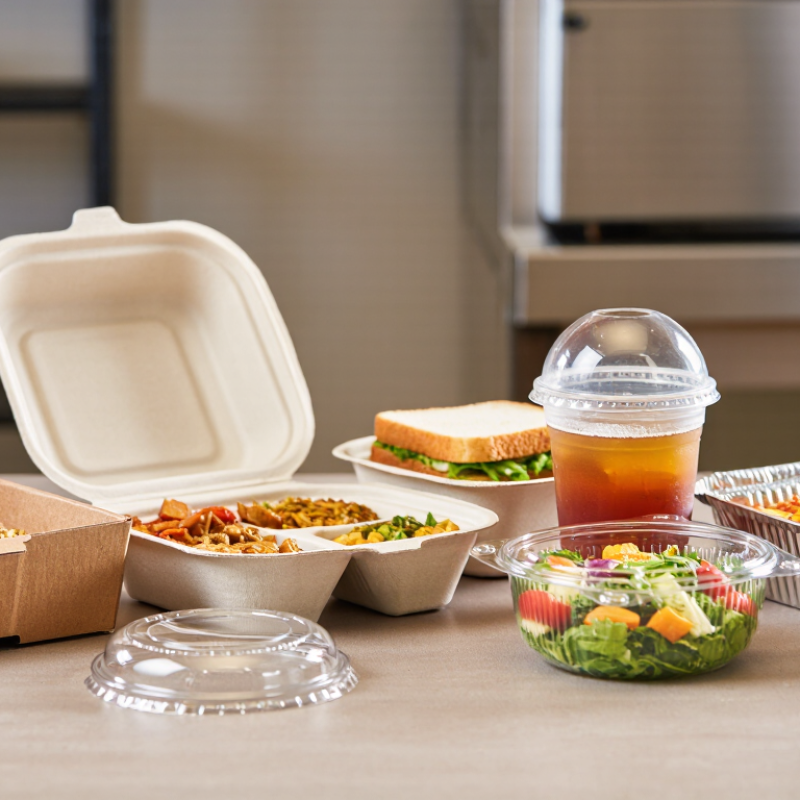
Disposable food packaging covers the items that hold, protect, serve, or transport food for short-term use. Common examples include paperboard cartons, molded-fiber trays, plastic cups, hinged takeaway boxes, flexible wraps, pouches, lids, and portion cups. Cutlery, napkins, and food-safe liners also belong in many buyers’ specifications.
Materials vary: paper, paperboard, molded fiber, and plastics such as PET or polypropylene serve different needs. A greasy sandwich needs a barrier; a hot soup needs a leak-resistant container. The boundary can blur.
The OECD’s Global Plastics Outlook (2022) estimates that packaging represented about 40% of plastic waste generated worldwide in 2019.
UNEP’s Turning off the Tap (2023) reports that packaging accounts for roughly 36% of plastics produced globally.
These figures cover packaging broadly, not food packaging alone, so they provide context rather than a direct food-service measurement. For buyers, the useful comparison is practical: check food-contact suitability, temperature limits, moisture resistance, and whether lids fit securely.
A paper label does not make a package wholly paper-based; coatings and linings can change its end-of-life options. Small parts matter. And the right format still depends on the menu, delivery time, and how food is handled.
Disposable food packaging choices depend on the food, serving temperature, and time in transit. Paperboard works well for dry meals, bakery items, and many takeaway boxes. Bowls and trays made from molded fiber offer a firm shape, with a slightly textured surface. Bagasse, a material made from sugarcane residue, is another option for sturdy plates and containers. It can handle warm foods, but performance varies by product. Check the details.
For liquids and greasy meals, material choice matters even more. Polypropylene containers tolerate heat better than many clear plastics and suit hot soups or reheating. PET is commonly used for cold drinks and clear lids, where visibility helps customers identify contents. Aluminum trays hold heat and can go from oven to counter in suitable settings. Paper products may include linings or coatings that affect how they handle moisture and oil. This detail is easy to miss. A recyclable-looking package is not automatically accepted by every local recycling program. Buyers should compare product specifications, food-contact suitability, leak resistance, and disposal guidance. The best fit is rarely neat: a lighter package may save space, while a thicker one can protect a saucy meal during delivery.
Matching disposable food packaging to a menu starts with heat, moisture, and travel time. For soup or curry, choose a sturdy, leak-resistant container with a secure lid. Fill one with hot broth and tilt it gently; a lid that loosens on the counter may fail during delivery. Details matter. For crisp foods, such as fries or fried chicken, a vented carton can release steam and help limit sogginess. A fully sealed box may keep food warm, but trap moisture.
Cold items need different choices. Clear containers can show layered salads, fruit, or desserts, while a tight-fitting lid helps prevent spills in stacked orders. For saucy dishes, check whether the container stays firm after several minutes of contact. If customers add dressing themselves, a small separate cup can keep greens fresher. Portion size also matters: oversized packaging lets food shift, while a snug fit can make packing awkward.
Service style changes the decision. A busy takeaway counter may benefit from containers that stack neatly and open quickly. Delivery teams should test packaging with the actual menu, including sauces, garnishes, and a realistic trip time. Test before ordering. One sample is rarely enough; compare several filled containers after carrying and stacking them. Packaging can still disappoint when the food changes temperature or sits longer than expected, so review the choice as the menu and service routine evolve.
How well common packaging types suit different food needs (relative fit score, 1 = low, 5 = high).
How to read this chart: Scores are indicative comparisons based on common material characteristics, not laboratory test results. Actual performance depends on the specific packaging design, coatings, closures, and supplier specifications.
Choosing disposable food packaging in 2026 means looking beyond the lowest unit price. Compare paper bowls, molded-fiber trays, plastic cups, and foil containers with the foods you actually serve. A soup bowl needs to resist leaks after ten minutes, not just look good on a sample table. For hot meals, test lid fit, stacking, and condensation on a real delivery route. Small trials help. They can reveal flaws that product sheets leave out.
Check performance and food safety together. Confirm that packaging suits the food type, temperature, and contact time. Request current food-contact documents, and make sure claims apply to the exact material and coating. Rules vary by market, so verify local requirements with qualified compliance staff. Include freight, storage, breakage, and complaints in cost comparisons. A cheaper container may cost more if lids loosen or grease stains bags. Still, it is easy to overvalue a tidy sample test; a busy shift can expose different weaknesses.
Tips: Test two or more options with actual portions and sealing equipment. Record leaks, heat retention, stacking stability, and delivered cost. Keep dated specifications and compliance records. If a material or coating changes, review it before reordering. Simple checks matter.
In 2026, buyers are comparing recyclable and compostable food packaging with closer attention to what happens after use. A fiber bowl may look sustainable, but its lining can affect whether local facilities accept it. A clear container may be technically recyclable, yet food residue or mixed materials can complicate sorting. Ask suppliers for material specifications, disposal guidance, and test results—not just broad environmental claims.
Compostable items can suit food-service settings where scraps and packaging are collected together. But access to suitable composting facilities varies widely. Some products need industrial composting conditions and will not break down properly in a backyard bin. That distinction matters. Buyers should check recognized certification details and confirm that local waste operators accept the specific format.
Recyclable paperboard, molded fiber, and certain single-material plastics may work better where collection systems are established. Test samples with real meals: hot soup, oily noodles, and a damp lid reveal problems that a catalog cannot. Check for leaks, stacking stability, and clear disposal labels. A package that performs well in a lab may disappoint during a busy lunch rush. Sourcing is rarely perfect; reducing excess material can sometimes be more practical than switching materials alone.
It includes cartons, trays, cups, takeaway boxes, wraps, pouches, lids, and portion cups. Cutlery, napkins, and food-safe liners may also be included.
Paperboard suits many bakery items, dry meals, and takeaway boxes. Molded-fiber trays offer a firm shape and a slightly textured surface.
Bagasse comes from sugarcane residue and can suit sturdy plates and containers. It may handle warm food, but performance varies by product. Check the details.
Polypropylene often handles heat better than many clear plastics, making it useful for soup. PET is common for cold drinks and clear lids.
Check food-contact suitability, temperature limits, moisture resistance, leak resistance, and lid fit. A secure lid matters during delivery.
No. Coatings and linings can affect disposal options, even when the package looks like paper. Small parts matter.
No. Local recycling programs differ, so check their guidance. The label alone may not tell the whole story.
Consider serving temperature, grease, moisture, delivery time, and food handling. A thicker package may protect a saucy meal, but the lighter option may save space. That trade-off is not always obvious.
Disposable Food Packaging in 2026 covers the containers, wraps, cups, trays, bags, and utensils used to protect food during preparation, takeaway, delivery, and service. Buyers can choose from materials such as paper, molded fiber, plastic, aluminum, and emerging plant-based options. Each type offers different strengths in insulation, moisture resistance, durability, presentation, and convenience, so the best choice depends on the food, serving temperature, transport time, and operating conditions.
A successful purchasing decision balances cost with performance, food-contact safety, and relevant compliance requirements. Buyers should also consider storage, ease of use, customer expectations, and how packaging will be handled after use. In 2026, sourcing is increasingly shaped by demand for recyclable and compostable options, but environmental claims and disposal pathways should be assessed carefully. Matching materials to local waste systems and practical service needs can help businesses reduce unnecessary packaging impacts without compromising food quality or reliability.